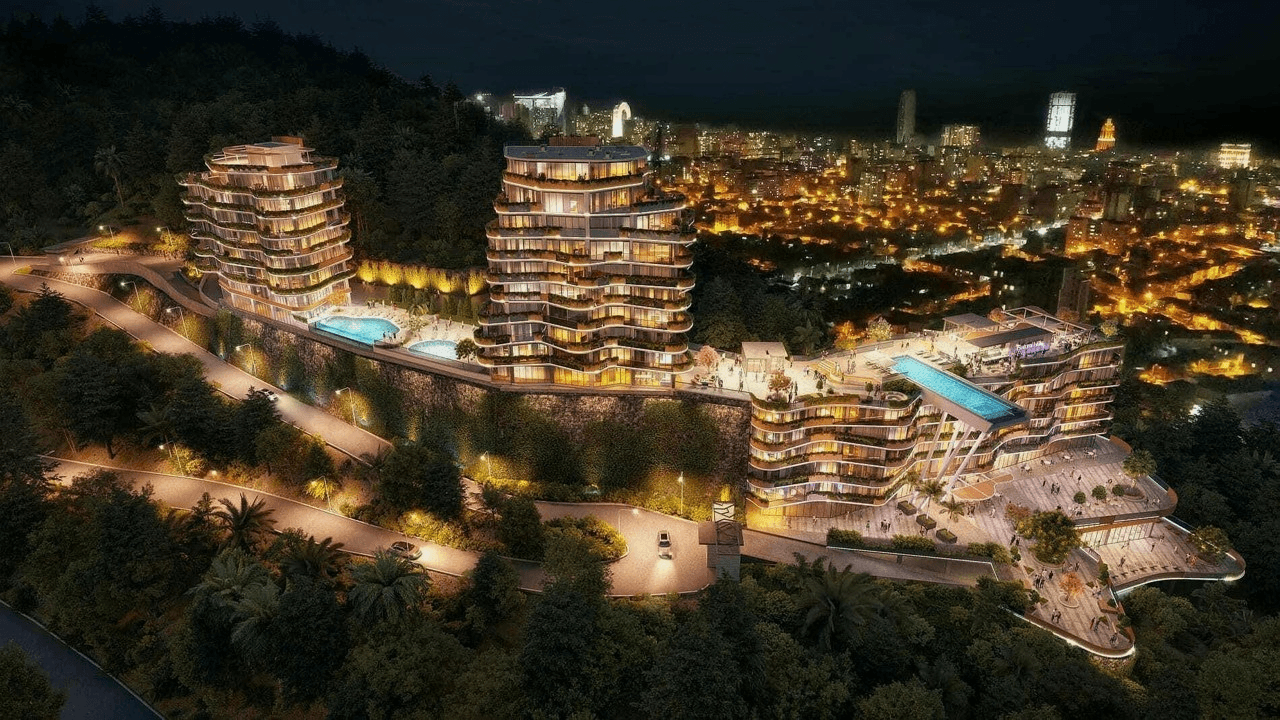

Internal spatial planning within the complex emphasizes standardized apartment configurations that accommodate independent professionals, couples, and multi-person households seeking clearly segmented living environments. Each residential unit adheres to verified engineering standards that optimize internal circulation, ensure adequate room proportions, and maintain consistent acoustic separation between adjacent dwelling units. The development model prioritizes long-term habitability and operational efficiency, which supports stable maintenance requirements throughout the building lifecycle.
Units totaling 44.75 m² represent a consistently selected housing category within regional development due to their alignment with moderate budget allocations and standard domestic requirements. This spatial configuration attracts purchasers who seek an optimal balance between interior comfort and operational efficiency. The layout supports long-term residential stability by offering adaptable interior arrangements that naturally evolve alongside changing lifestyle requirements.
An apartment located on the 5 floor receives optimal daylight distribution due to unobstructed facade exposure and strategic alignment with regional solar trajectories. The vertical positioning ensures that interior compartments maintain uniform brightness levels, which substantially reduces reliance on artificial lighting during daytime hours. This spatial arrangement supports a regulated indoor microclimate and optimizes overall spatial perception.
The $98,699 allocation integrates proximity to verified neighborhood amenities, including retail facilities, transit nodes, and recreational parks, which collectively reduce routine operational expenses for residents. Financial deployment accounts for external service accessibility and urban integration rather than isolated architectural embellishments. This pricing model ensures that residential costs remain structurally balanced with documented municipal advantages.
The apartment’s strategic integration into a mature urban district, supported by transparent financial structuring and standardized interior metrics, provides a stable foundation for continuous occupancy within a regulated coastal setting. Architectural specifications align with established residential engineering protocols, ensuring consistent climate performance and spatial functionality. Interested parties may review technical documentation to confirm room distribution parameters and ventilation routing compliance.