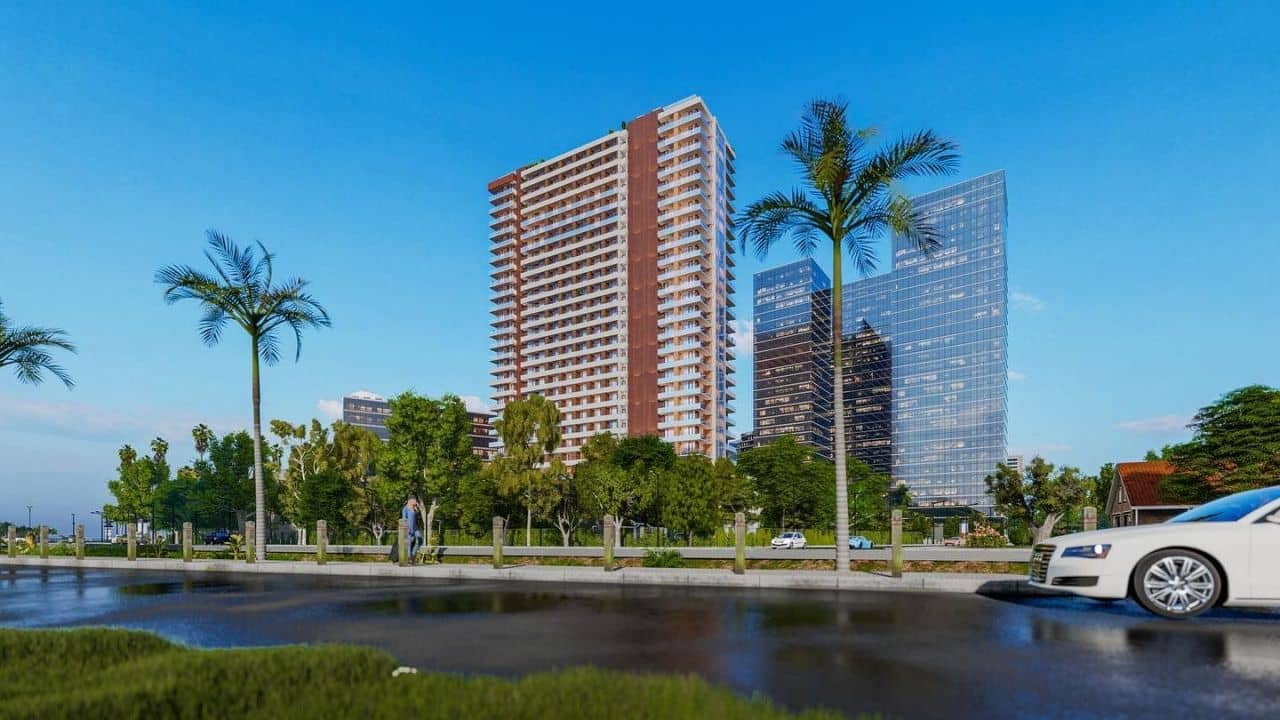

Contemporary spatial planning defines the interior configuration of this residential project, with layouts engineered to maximize functional utility across varying apartment sizes. The unit forms part of an eighteen-story structure that incorporates ergonomic zoning and standardized finishing standards aligned with comfort-class expectations. Thoughtful corridor planning and logical room distribution ensure that every square meter serves a clear residential purpose. This architectural methodology supports efficient furniture placement and smooth circulation, which is particularly valuable in Batumi’s dynamic rental and ownership markets.
The 36.3 m² footprint represents one of the most liquid formats in this development, as it matches the consistent demand from airline staff and transit-focused professionals. Developers allocate this size to ensure rapid leasing cycles while keeping utility expenses proportional to actual occupancy. Such dimensions simplify cleaning routines and reduce seasonal maintenance costs, which directly supports stable cash flow for passive investors.
Occupying the 19 floor establishes an optimal equilibrium between urban visibility and atmospheric quietness, shielding interiors from street-level noise while preserving clear sightlines across the Airport district. Mid-level placement ensures reliable natural illumination throughout daylight hours without exposing windows to direct solar glare. This elevation delivers consistent thermal regulation and stable air circulation patterns year-round.
A valuation of $47,190 corresponds to Elt Building’s established execution standards, where nine prior Georgian developments demonstrate consistent material quality and timely delivery schedules. This pricing framework accounts for standardized architectural planning and ergonomic spatial distribution, minimizing post-purchase renovation requirements. Investors benefit from predictable construction benchmarks that support accurate yield forecasting and straightforward asset management.
The completion schedule and the district’s progressive infrastructure expansion support a structured valuation horizon, allowing asset growth to align with neighborhood maturation. Standardized layouts and integrated parking sustain consistent tenant demand while minimizing operational friction for owners. Prospective investors can analyze specific configurations and payment schedules to determine optimal portfolio integration methods.