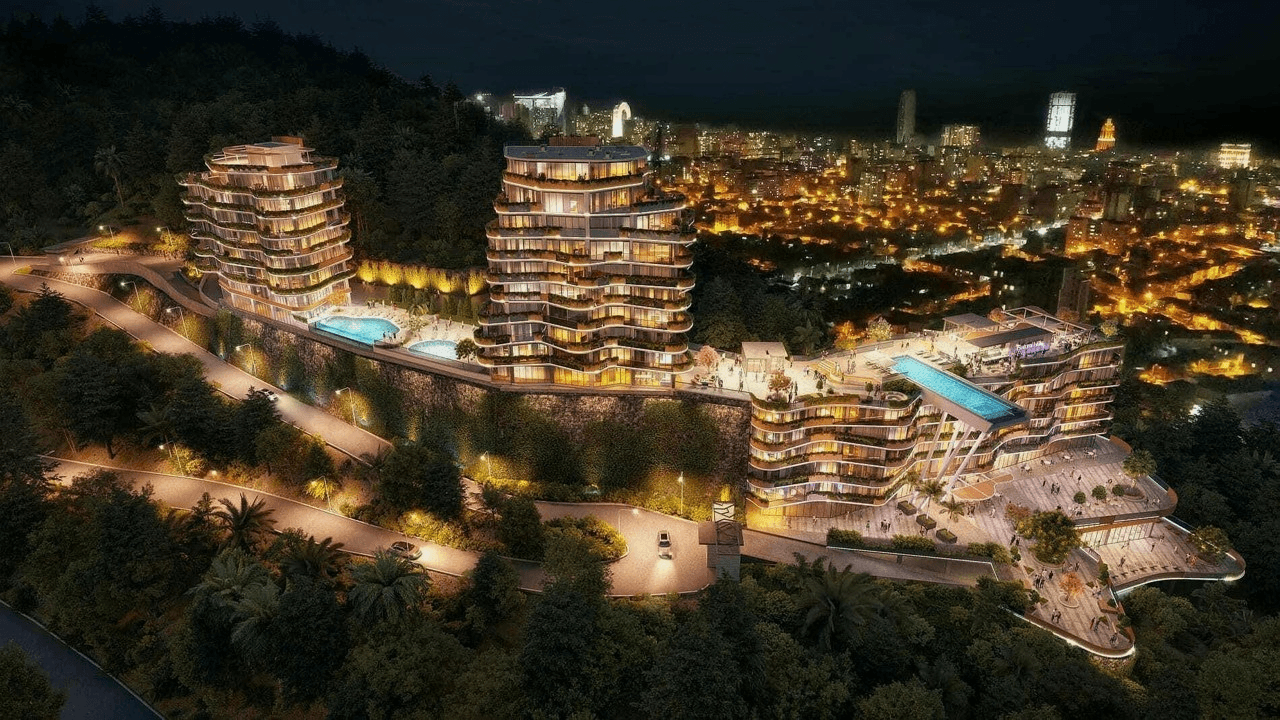

The architectural framework of Mardi Hills accommodates diverse household configurations by distributing clearly defined one, two, and three-room layouts across a unified residential structure. This spatial organization allows future occupants to select an apartment that precisely corresponds with their domestic requirements and long-term living objectives. The development operates under standardized construction protocols that prioritize structural integrity, predictable maintenance cycles, and straightforward documentation procedures for all property transactions.
Apartments with a total footprint of 36.94 m² consistently demonstrate stable occupancy metrics within the Batumi market due to their accessible entry threshold and straightforward operational logic. Buyers frequently select this configuration for seasonal accommodation or as a primary dwelling with minimal external space dependencies. The internal layout supports a predictable cost structure for utilities and property management, which appeals directly to budget-conscious purchasers.
Units located on the 7 level benefit from enhanced natural ventilation dynamics due to decreased atmospheric obstruction and consistent wind channeling at upper building altitudes. The elevated positioning promotes continuous air exchange through operable glazing, which regulates internal humidity levels and prevents atmospheric stagnation. This architectural advantage improves respiratory comfort and minimizes mechanical climate system reliance.
The $86,440 allocation integrates proximity to verified neighborhood amenities, including retail facilities, transit nodes, and recreational parks, which collectively reduce routine operational expenses for residents. Financial deployment accounts for external service accessibility and urban integration rather than isolated architectural embellishments. This pricing model ensures that residential costs remain structurally balanced with documented municipal advantages.
The integration of verified spatial dimensions, structured vertical placement, and transparent financial parameters establishes a coherent residential framework that prioritizes functional occupancy over speculative market attributes. Each measurable characteristic operates within documented project standards, ensuring predictable daily operations and manageable facility maintenance. Interested parties may examine specific unit blueprints to confirm precise alignment with individual housing requirements.