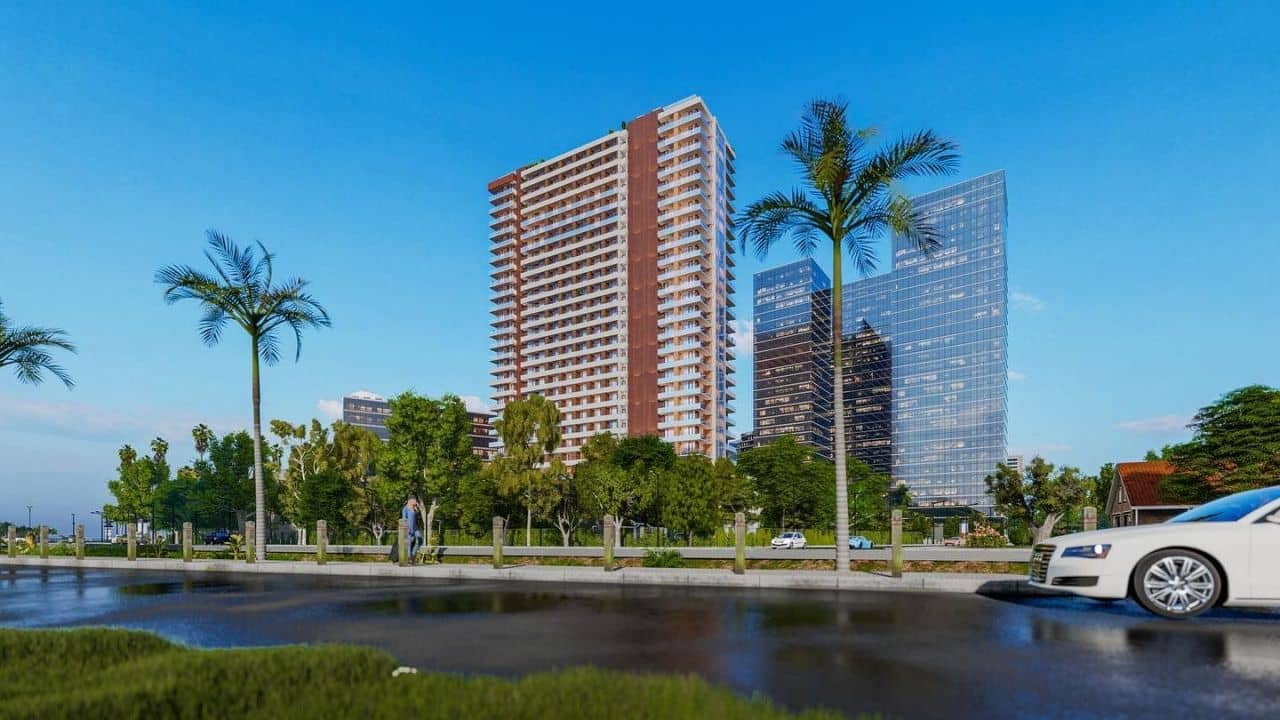
Contemporary spatial planning defines the interior configuration of this residential project, with layouts engineered to maximize functional utility across varying apartment sizes. The unit forms part of an eighteen-story structure that incorporates ergonomic zoning and standardized finishing standards aligned with comfort-class expectations. Thoughtful corridor planning and logical room distribution ensure that every square meter serves a clear residential purpose. This architectural methodology supports efficient furniture placement and smooth circulation, which is particularly valuable in Batumi’s dynamic rental and ownership markets.
The 77.4 m² interior volume allows for flexible room adaptation, enabling residents to reconfigure secondary spaces as study areas, guest rooms, or extended living zones. This dimensional range integrates smoothly with the complex’s centralized amenities, reducing the need for oversized private storage. The layout maintains optimal light distribution and airflow patterns, which aligns with contemporary comfort standards expected in modern Georgian developments.
Residing at the 7 floor places residents in immediate proximity to the building’s ground-level commercial zones, streamlining access to retail services and shared facility entrances. Reduced elevator dependency translates into quieter hallway traffic and faster response times for maintenance requests routed through property management. This positioning balances residential privacy with convenient neighborhood integration.
At $69,660, the apartment delivers proportional utility relative to its 77.4 m² footprint, ensuring that acquisition costs remain synchronized with practical living space and operational efficiency. The developer’s comfort-class standardization reduces unexpected finishing expenses, while interest-free installment options distribute financial exposure across a manageable timeframe. Such pricing transparency supports structured investment planning without compromising construction quality.
The completion schedule and the district’s progressive infrastructure expansion support a structured valuation horizon, allowing asset growth to align with neighborhood maturation. Standardized layouts and integrated parking sustain consistent tenant demand while minimizing operational friction for owners. Prospective investors can analyze specific configurations and payment schedules to determine optimal portfolio integration methods.