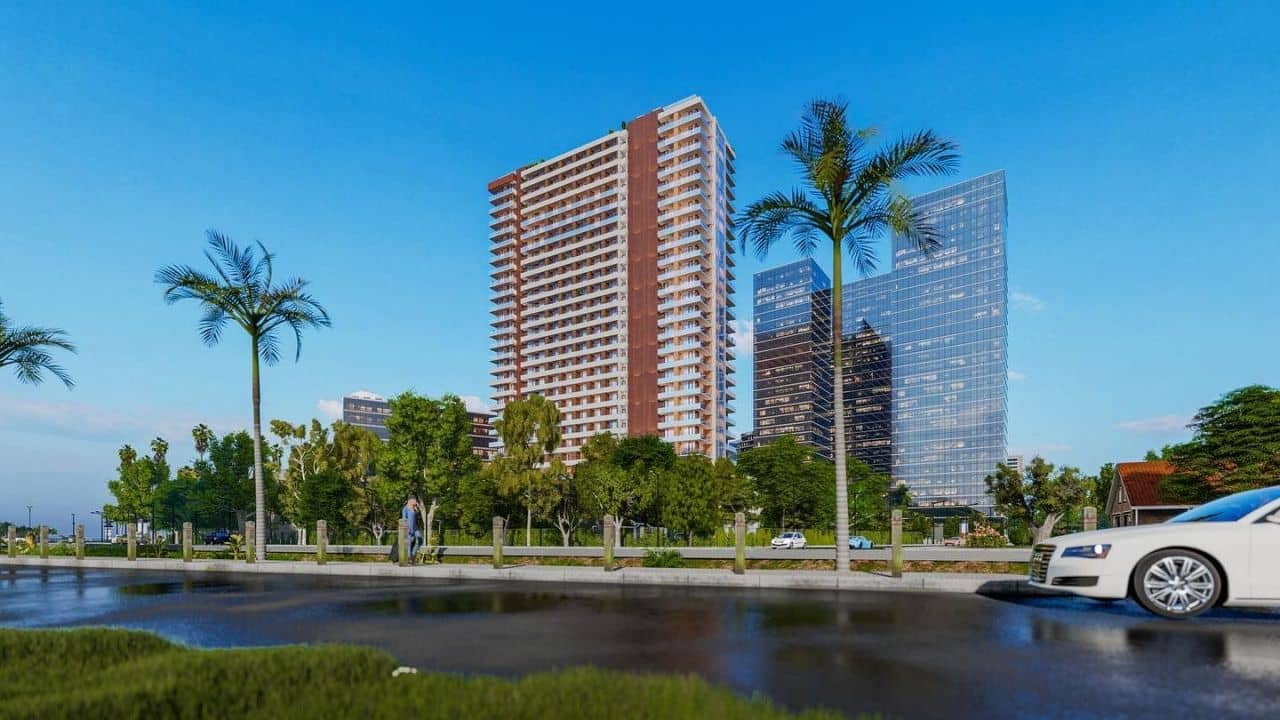
Contemporary spatial planning defines the interior configuration of this residential project, with layouts engineered to maximize functional utility across varying apartment sizes. The unit forms part of an eighteen-story structure that incorporates ergonomic zoning and standardized finishing standards aligned with comfort-class expectations. Thoughtful corridor planning and logical room distribution ensure that every square meter serves a clear residential purpose. This architectural methodology supports efficient furniture placement and smooth circulation, which is particularly valuable in Batumi’s dynamic rental and ownership markets.
Residences of 81.7 m² utilize the eighteen-story footprint to maximize natural illumination and cross-ventilation, creating an open atmosphere that reduces reliance on artificial climate control. The extended floor plan supports multiple entertainment zones, separate utility rooms, and dedicated storage corridors without spatial congestion. This scale provides long-term adaptability, ensuring the apartment remains functional as household requirements evolve over time.
The 26 floor elevation captures consistent cross-ventilation patterns and cooler summer breezes, mitigating heat accumulation that typically affects lower residential tiers in coastal developments. Increased altitude reinforces acoustic separation from elevator shafts and common corridor activity, delivering a more secluded living atmosphere. Such vertical placement appeals to professionals seeking undisturbed workspaces or residents prioritizing environmental calm.
At $138,890, the apartment delivers proportional utility relative to its 81.7 m² footprint, ensuring that acquisition costs remain synchronized with practical living space and operational efficiency. The developer’s comfort-class standardization reduces unexpected finishing expenses, while interest-free installment options distribute financial exposure across a manageable timeframe. Such pricing transparency supports structured investment planning without compromising construction quality.
The completion schedule and the district’s progressive infrastructure expansion support a structured valuation horizon, allowing asset growth to align with neighborhood maturation. Standardized layouts and integrated parking sustain consistent tenant demand while minimizing operational friction for owners. Prospective investors can analyze specific configurations and payment schedules to determine optimal portfolio integration methods.